

Badger Hair Alternatives: Lab - Grown Fibers That Mimic Natural Texture
Badger Hair Alternatives Lab Grown Fibers That Mimic Natural Texture
For decades, badger hair has reigned supreme in the shaving brush industry, prized for its unique ability to hold water, create a rich lather, and glide smoothly across the skin. Its natural texture—soft yet resilient, with tapered tips that adapt to facial contours—has made it a staple for wet shaving enthusiasts. However, growing concerns over animal welfare, unsustainable harvesting practices, and fluctuating supply chains have sparked a search for viable alternatives. Enter lab-grown fibers: a new generation of synthetic materials engineered to replicate the performance and feel of badger hair, without the ethical or environmental drawbacks.
The push for badger hair alternatives stems from two key challenges. First, wild badger populations face pressure from habitat loss and unregulated hunting, with some species listed as vulnerable. Second, natural badger hair varies in quality—factors like age, season, and region create inconsistencies, making it hard for manufacturers to guarantee uniform performance. Lab-grown fibers address both issues by offering controlled, cruelty-free production and consistent texture.
So, how do these lab-engineered fibers mimic badger hair’s natural properties? The secret lies in biomimicry and advanced material science. Researchers start by analyzing the microstructure of badger hair under electron microscopes, noting details like the scale pattern along the shaft, the flexibility of the fiber core, and the way it retains moisture. Using this data, they design synthetic fibers with similar physical characteristics: a hollow core to enhance water retention, a tapered tip for softness, and a surface texture that traps air bubbles to build lather—mirroring the natural hair’s ability to create a creamy, long-lasting foam.
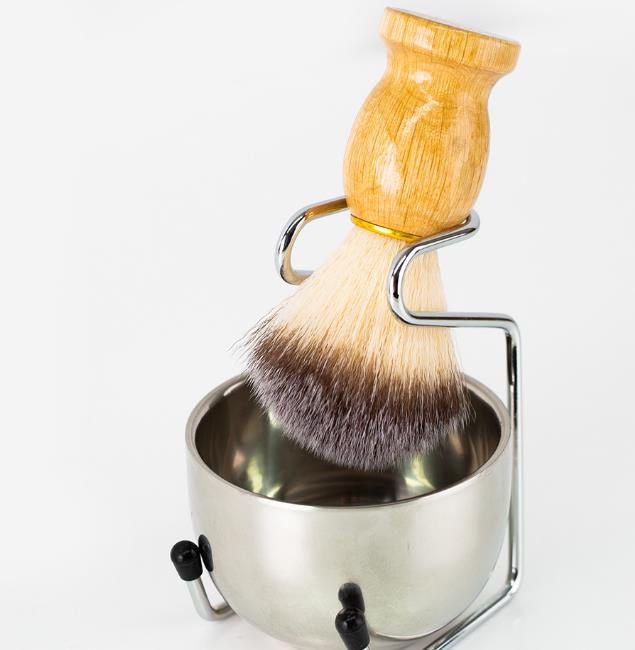
One breakthrough in lab-grown fibers is the use of bio-based polymers, derived from renewable resources like plant starches or recycled plastics. These materials are not only eco-friendly but also adjustable in density and elasticity. For example, by tweaking the polymer blend, engineers can create fibers that are as soft as "silvertip" badger hair (the highest grade) or as sturdy as "best" badger hair, catering to different shaving preferences. Unlike natural hair, which can become brittle over time, these synthetic fibers are often treated with anti-microbial coatings, extending their lifespan and reducing the need for frequent replacements.
The performance of lab-grown alternatives is increasingly winning over both manufacturers and consumers. Independent tests show that top-tier synthetic fibers can hold up to 90% of the water capacity of badger hair and generate lather just as quickly. Shaving enthusiasts report that the synthetic brushes glide smoothly, reducing irritation—a critical factor for those with sensitive skin. Moreover, lab-grown fibers eliminate the "break-in" period required for natural badger hair brushes, delivering optimal performance from the first use.
Sustainability is another major advantage. Traditional badger hair harvesting involves energy-intensive processes, from trapping to cleaning and sorting. Lab-grown fibers, by contrast, are produced in controlled facilities with minimal waste, and many manufacturers use carbon-neutral production methods. This aligns with the growing consumer demand for eco-conscious grooming products; a 2023 survey by the Global Grooming Association found that 68% of consumers prioritize sustainability when choosing shaving tools.
As the technology matures, lab-grown fibers are also becoming more cost-effective. While premium badger hair brushes can cost upwards of $100, synthetic alternatives offer comparable quality at a fraction of the price, making high-performance shaving accessible to a broader market. This affordability, combined with ethical and environmental benefits, is driving adoption among both luxury brands and mass-market retailers.
The future of lab-grown badger hair alternatives looks promising. Ongoing research focuses on enhancing texture realism—for instance, developing fibers with natural color variations or improving heat resistance for use with hot water. Some companies are even experimenting with 3D printing to create custom brush heads, tailoring fiber density and arrangement to individual shaving styles.
In conclusion, lab-grown fibers are not just a substitute for badger hair—they are a superior, sustainable evolution. By replicating the natural texture and performance that made badger hair iconic, while addressing its ethical and logistical flaws, these synthetic materials are reshaping the shaving brush industry. For consumers and manufacturers alike, the shift toward lab-grown alternatives represents a win-win: exceptional shaving experiences without compromise.


