

Demand for Contour Brushes Stimulates Angled Bristle Development
Demand for Contour Brushes Drives Innovation in Angled Bristle Technology
The global beauty industry is witnessing a significant surge in demand for contour brushes, a trend that has become a catalyst for innovation in angled bristle development. As consumers increasingly prioritize precision and natural-looking definition in their makeup routines, the need for tools that can seamlessly sculpt facial features has pushed manufacturers to reimagine bristle design—with angled bristles emerging as the solution to meet evolving market needs.
Contour makeup, once a niche technique dominated by professional artists, has gone mainstream, thanks in part to social media tutorials and the rise of "no-makeup makeup" trends. Platforms like Instagram and TikTok have popularized looks that emphasize subtle cheekbones, defined jawlines, and softened nose bridges, driving consumers to seek brushes that offer control and accuracy. Traditional flat or rounded brushes often fall short here: they struggle to reach tight areas like the hollows of the cheeks or the sides of the nose, leading to patchy application or excess product buildup. This gap in functionality has directly fueled the demand for angled contour brushes.
What makes angled bristles so effective? The key lies in their ergonomic design. Unlike straight bristles, which apply product in a broad, flat sweep, angled brushes feature bristles cut at a 45-degree (or steeper) angle, allowing them to hug the natural curves of the face. This design enables users to deposit product precisely along the cheekbones, temples, and jawline—areas where contouring requires targeted, gradient application. For instance, a 30-degree angled brush can easily glide along the orbital bone to create a lifted eye effect, while a steeper 60-degree angle works best for sharpening the jawline.
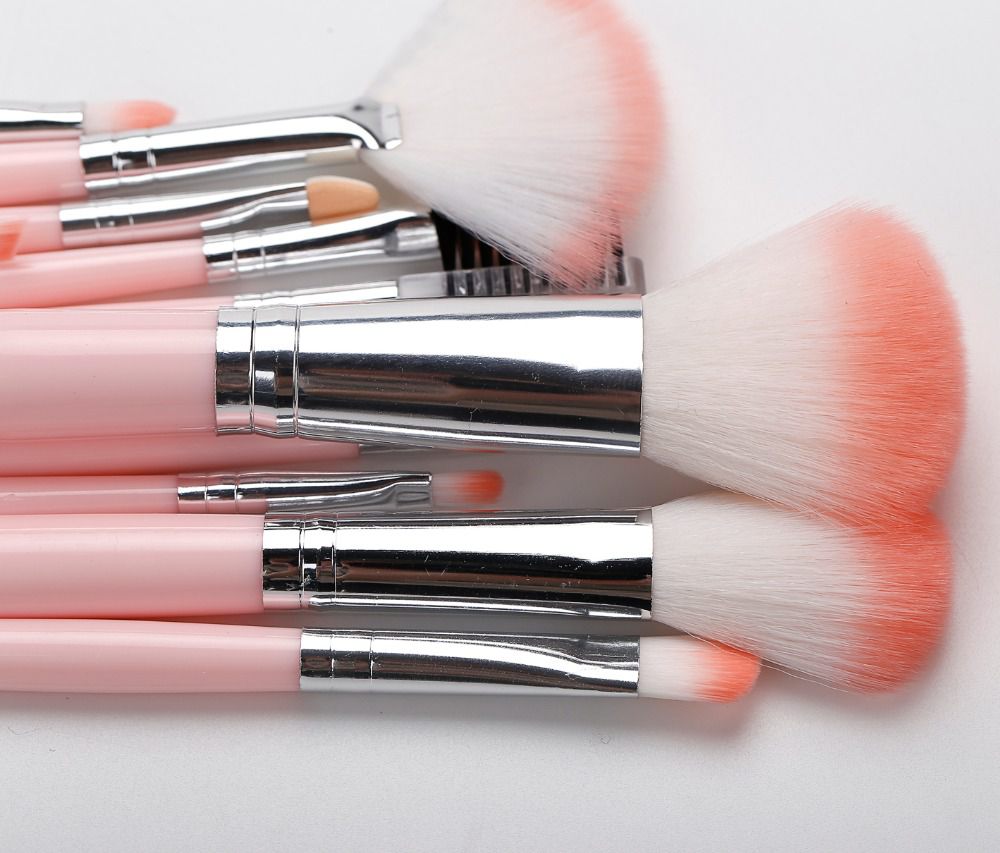
Material innovation has also played a critical role in advancing angled bristle technology. Early contour brushes often relied on natural animal hairs, which, while soft, lacked consistency in bristle length and density. Today, synthetic fibers—such as nylon, taklon, and polyester blends—dominate the market. These materials are engineered to mimic the softness of natural hair while offering superior shape retention, ensuring the angled tip maintains its precision even after repeated use. Additionally, synthetic bristles are cruelty-free, aligning with the growing consumer preference for ethical beauty products.
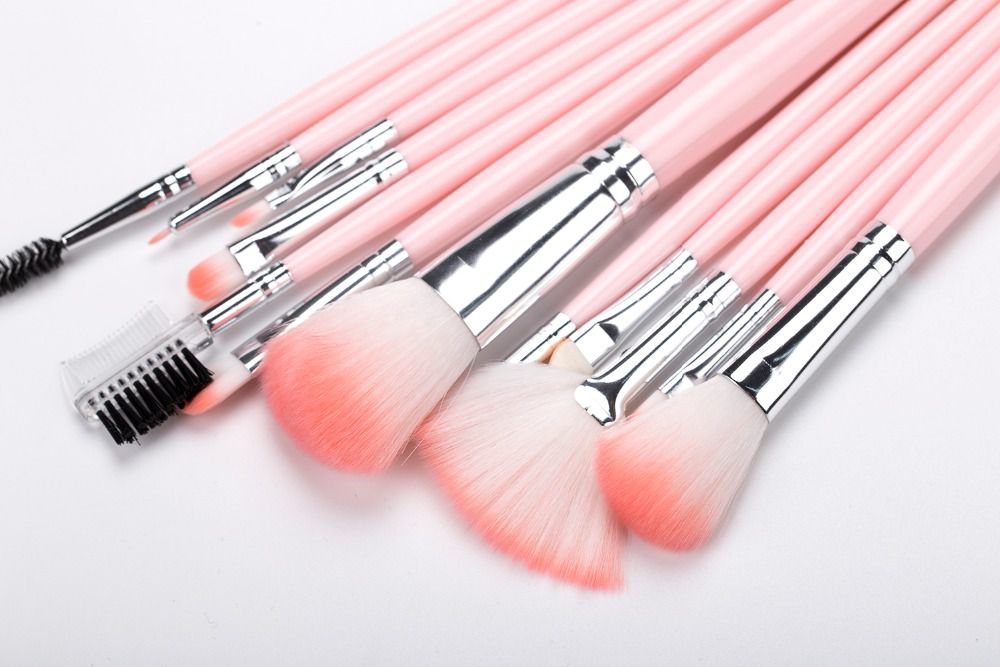
Manufacturers are now leveraging data and consumer feedback to refine angled bristle geometry. Brands like Fenty Beauty and Morphe have collaborated with makeup artists to test various bristle angles, densities, and lengths, using 3D facial scanning technology to map common contouring zones. This data-driven approach has led to brushes with tapered angled tips—where the outer bristles are slightly longer than the inner ones—creating a "feathered" edge that blends product seamlessly, eliminating harsh lines.
The rise of angled bristle contour brushes has also spurred cross-industry innovation. Brush丝 (brush filament) producers, for example, are developing specialized synthetic fibers with varying degrees of flexibility. Stiffer bristles are used for cream or powder contour products, providing the control needed for bold definition, while softer, more pliable fibers cater to liquid contour formulas, ensuring smooth, streak-free application. Some manufacturers are even experimenting with hollow-core fibers that absorb and release product evenly, reducing waste and improving longevity.
Looking ahead, the demand for contour brushes is projected to grow, driven by Gen Z and millennial consumers who view makeup as a form of self-expression. This will likely push angled bristle technology further, with potential advancements in customizable angles (via modular brush heads) and smart materials that adapt to skin type or product texture. As the line between professional and at-home makeup tools blurs, angled bristles are set to remain at the forefront of this evolution—proof that consumer demand, when paired with technical ingenuity, can transform an entire product category.


