

Study on Heat-Setting Process Parameters for Bristle Shape Retention
Study on Heat-Setting Process Parameters for Bristle Shape Retention in Makeup Brushes
In the makeup brush industry, bristle shape retention is a critical quality指标 that directly impacts user experience—from precise powder application to long-term durability. Among the manufacturing processes, heat-setting stands out as the key step that "locks" bristle形态, ensuring brushes maintain their intended shape after repeated use and cleaning. This explores the core heat-setting parameters—temperature, duration, pressure, and cooling rate—and their synergistic effects on bristle shape retention, offering insights for manufacturers aiming to optimize product performance.
The Role of Heat-Setting in Bristle Performance
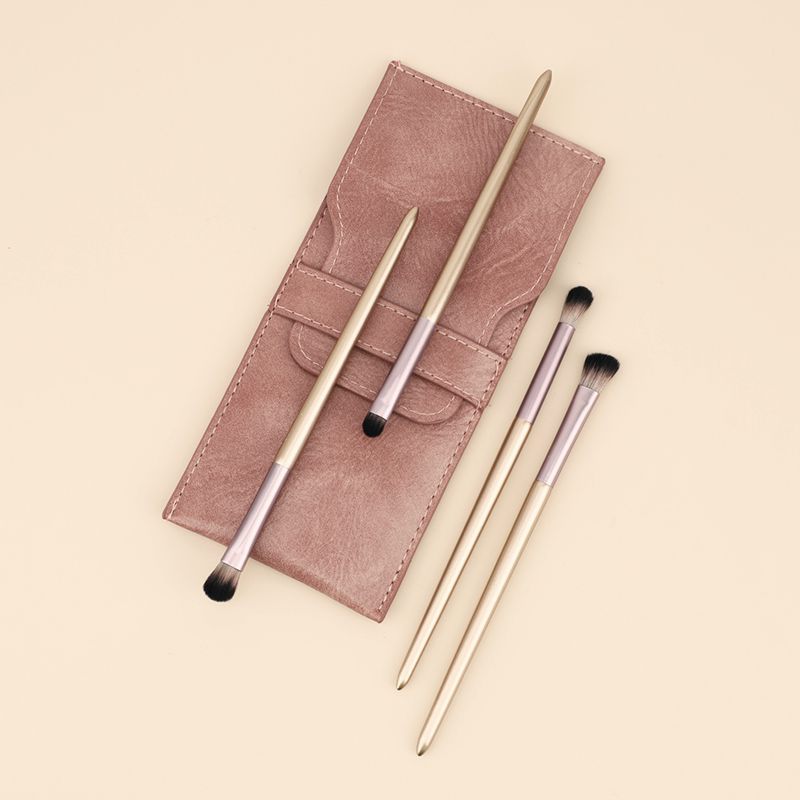
Bristles, whether synthetic (e.g., nylon, PBT) or natural (e.g., goat hair), are thermoplastic materials whose molecular structure can be reorganized under heat. Heat-setting involves subjecting bristle tufts to controlled heat, pressure, and cooling, aligning polymer chains to form a stable, rigid structure. Poorly optimized parameters often lead to common issues: bristle "splaying" (loss of shape after washing), uneven tip alignment, or brittleness due to material degradation.
Key Parameters and Their Impact
1. Temperature: The Foundation of Molecular Alignment
Temperature determines the extent of polymer chain mobility. For synthetic bristles like nylon 6 (melting point ~220°C), a heat-setting temperature of 120–150°C is typically optimal—high enough to soften the material without causing thermal degradation. Exceeding 160°C risks breaking molecular bonds, leading to bristle weakening. Natural bristles, with lower heat resistance, require milder temperatures (80–100°C) to avoid protein denaturation.
2. Duration: Balancing Efficiency and Effectiveness
Heat exposure time must align with temperature: higher temperatures demand shorter durations to prevent over-processing. For nylon bristles, 10–20 seconds at 130°C ensures full molecular relaxation, while longer times (25+ seconds) may cause surface charring. Conversely, insufficient duration (e.g.,<8 seconds) leaves chains incompletely aligned, resulting in poor shape retention post-cleaning.
3. Pressure: Ensuring Uniform Shape
Pressure (typically 0.3–0.5 MPa) compresses bristle tufts against a mold, ensuring consistent contact with the heat source and uniform shape formation. Inadequate pressure leads to uneven heat distribution, causing some bristles to retain their original curl while others over-set. Excessive pressure, however, can flatten bristle tips, reducing softness—a critical factor for high-end makeup brushes.
4. Cooling Rate: Locking in the Set Shape
Rapid cooling (5–10°C/s) after heat exposure "freezes" the aligned polymer chains, preventing reversion to their original state. Slow cooling allows chains to relax, weakening the set shape. For manufacturers, using forced air or water-cooled molds accelerates this process, improving production efficiency while enhancing shape stability.
Synergistic Optimization: A Case Study
A recent trial with PBT bristles (commonly used in vegan brushes) demonstrated the importance of parameter balance. Testing three combinations—(120°C, 15s, 0.4MPa), (140°C, 10s, 0.3MPa), and (130°C, 20s, 0.5MPa)—revealed that (140°C, 10s, 0.3MPa) achieved the highest shape retention rate (92% after 50 washes) with minimal bristle damage. This "high-temperature, short-duration" approach balanced efficiency and performance, reducing energy consumption by 15% compared to the traditional (130°C, 20s) cycle.
Conclusion
Heat-setting is a precision-driven process where temperature, duration, pressure, and cooling rate interact to define bristle quality. By tailoring parameters to bristle material (synthetic vs. natural) and desired performance (softness vs. rigidity), manufacturers can produce brushes that maintain their shape, enhance user satisfaction, and stand out in a competitive market. As consumer demand for durable, high-performance makeup tools grows, mastering these parameters becomes not just a manufacturing goal, but a key differentiator.


