

Brush Manufacturers Invest in Smart Factories to Enhance Bristle Production Efficiency
Brush Manufacturers Invest in Smart Factories to Enhance Bristle Production Efficiency
In the competitive landscape of the global cosmetics and personal care industry, the demand for high-quality makeup brushes and bristle materials has surged. As consumers increasingly prioritize product performance and durability, brush manufacturers are under growing pressure to optimize production processes. A key trend emerging in recent years is the significant investment in smart factories, a strategic move aimed at enhancing bristle production efficiency, reducing costs, and elevating product quality.
Traditional bristle production has long relied on manual labor and semi-automated processes, which are prone to inconsistencies, human error, and limited scalability. From raw material sorting to bristle cutting, shaping, and quality inspection, each step often required intensive manual oversight, leading to bottlenecks in output and higher rates of defective products. For instance, natural bristle sources like goat or squirrel hair demand precise sorting to ensure uniformity in texture and length, a task that was historically time-consuming and error-prone when done by hand.
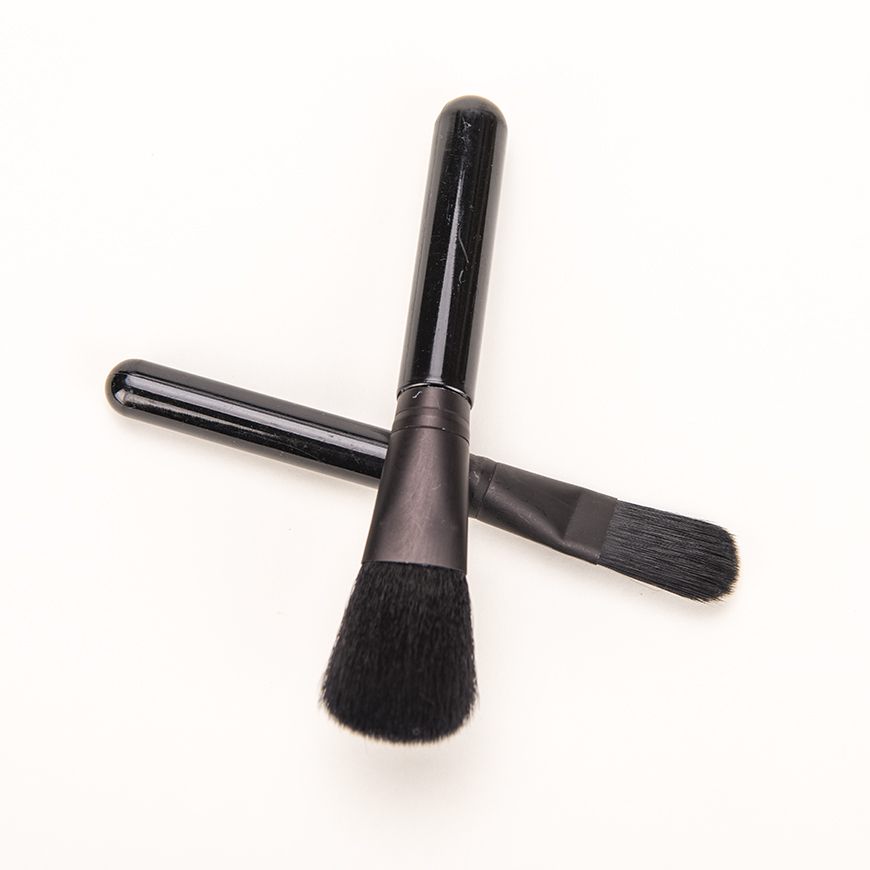
Smart factories are transforming this paradigm by integrating advanced technologies such as the Internet of Things (IoT), artificial intelligence (AI), machine learning (ML), and robotics. IoT sensors, for example, are now embedded in production lines to monitor real-time data on bristle density, fiber elasticity, and cutting precision. This data is fed into AI-powered analytics platforms, which can instantly identify deviations from quality standards—such as bristle lengths outside the target range or inconsistencies in softness—and trigger automated adjustments. A leading brush manufacturer in China reported a 28% reduction in defective bristle batches within six months of implementing IoT-based quality control, according to industry insiders.
Robotics plays a pivotal role in streamlining labor-intensive tasks. Automated arms equipped with computer vision can sort raw bristle materials at speeds up to 500 pieces per minute, a 300% increase compared to manual sorting. These robots are trained to recognize subtle differences in bristle color, thickness, and flexibility, ensuring only the highest-grade fibers proceed to production. Additionally, robotic cutting systems, guided by ML algorithms, adjust blade angles and pressure based on bristle type—whether synthetic (nylon, polyester) or natural—resulting in cleaner cuts and reduced fiber damage. This precision not only improves bristle quality but also minimizes material waste, a critical factor as raw material costs for premium bristles continue to rise.
Another key advantage of smart factories is predictive maintenance. By analyzing data from IoT sensors on machinery performance—such as vibration, temperature, and energy consumption—AI systems can forecast potential equipment failures before they occur. This proactive approach reduces unplanned downtime, which historically accounted for 15-20% of production losses in traditional facilities. A case study from a European brush manufacturer showed that predictive maintenance cut downtime by 40% and extended machinery lifespan by 25%, significantly lowering operational costs.

Beyond efficiency and quality, smart factories enable greater flexibility in production. With consumer preferences shifting rapidly—from ultra-soft synthetic bristles for liquid foundations to dense natural bristles for powder products—manufacturers need to adapt quickly. Smart systems allow for rapid reconfiguration of production lines, with AI algorithms optimizing workflow for different bristle types in real time. This agility helps manufacturers meet short lead times and capitalize on emerging trends, a competitive edge in an industry where product innovation cycles are increasingly short.
While the initial investment in smart factory technologies is substantial, the long-term returns are compelling. Industry analysts project that brush manufacturers leveraging smart manufacturing can achieve a 20-35% increase in overall production efficiency within the first two years, with ROI typically realized within 3-5 years. Moreover, the data-driven insights from smart systems provide valuable feedback for product development, helping manufacturers design bristles that better align with consumer needs—such as improved durability or eco-friendly materials.
Looking ahead, the integration of smart factories is set to become a standard in the brush manufacturing sector. As sustainability gains traction, smart systems will also play a role in reducing environmental impact by optimizing energy use and minimizing waste. For example, AI-driven material allocation can ensure raw bristle usage is maximized, while IoT sensors monitor energy consumption to identify areas for efficiency gains.
In conclusion, the investment in smart factories marks a transformative shift for brush manufacturers. By harnessing IoT, AI, and robotics, these facilities are not only enhancing bristle production efficiency but also setting new benchmarks for quality, flexibility, and sustainability. As consumer demands evolve and competition intensifies, smart manufacturing will no longer be an option but a necessity for manufacturers aiming to thrive in the global market.


