

Effect of Bristle Density on the Application Uniformity of Liquid Foundation
Effect of Bristle Density on the Application Uniformity of Liquid Foundation
When it comes to achieving a flawless liquid foundation finish, the choice of makeup brush plays a pivotal role—and among its key attributes, bristle density stands out as a critical factor influencing application uniformity. Bristle density, defined as the number of bristles per square centimeter, directly impacts how foundation is picked up, distributed, and blended on the skin. This explores the science behind this relationship, offering insights for both consumers and manufacturers aiming to optimize makeup application outcomes.
Understanding Bristle Density: A Spectrum of Performance
Bristle density typically ranges from low (50–100 bristles/cm²) to high (200+ bristles/cm²), with medium density (100–200 bristles/cm²) serving as a balanced middle ground. Each density category interacts uniquely with liquid foundation, shaped by bristle spacing, flexibility, and contact pressure.
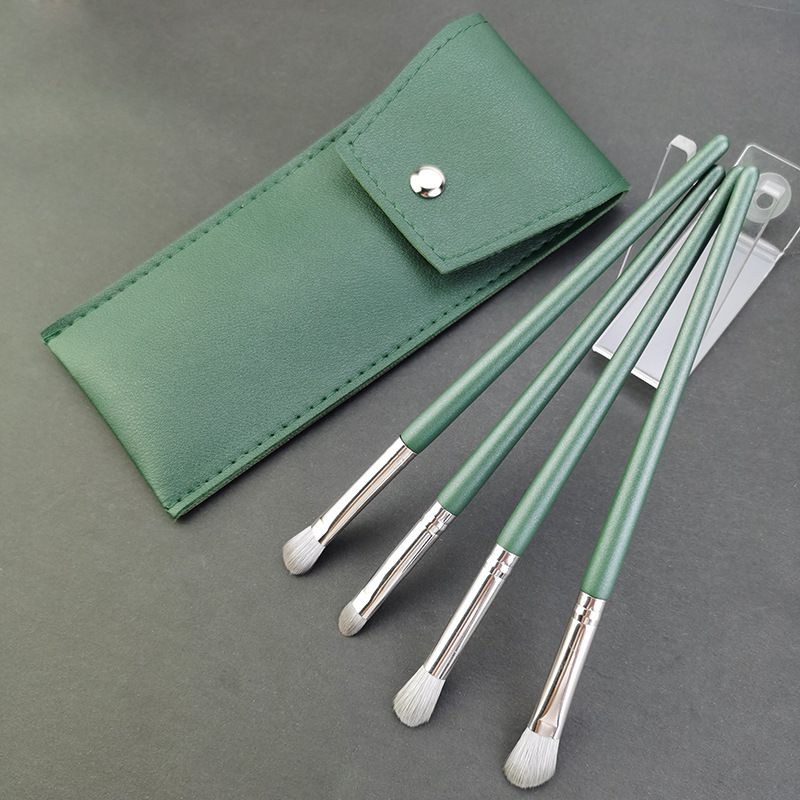
Low-Density Brushes: Characterized by sparse bristle arrangement, these brushes leave significant gaps between fibers. While they may feel lightweight, their ability to hold and distribute foundation evenly is limited. The uneven spacing causes inconsistent product pickup—some areas grab more foundation, others less—leading to patchy, streaky application. Low density is often favored for sheer, "no-makeup" looks, but牺牲s uniformity for a lightweight feel, making it less ideal for full-coverage or high-pigment foundations.
Medium-Density Brushes: Striking a balance between bristle count and spacing, medium-density brushes excel in uniform application. The moderate bristle packing allows them to pick up an optimal amount of foundation without overloading, while the even spacing ensures steady, controlled release onto the skin. The bristles flex uniformly under pressure, maintaining consistent contact with the skin’s surface—whether on flat areas like the cheeks or contour areas like the jawline. This density is versatile, working well with most liquid foundation textures (hydrating, matte, or dewy) and skin types, making it a staple in both consumer and professional makeup kits.
High-Density Brushes: With tightly packed bristles, these tools hold large amounts of product and release it slowly. While this can create a seamless, airbrushed finish with细腻质地 foundations, high density risks over-concentration. Excess product buildup in bristle clusters may lead to cakey patches, especially with thick or fast-drying formulas. Additionally, the stiff bristle arrangement can reduce flexibility, making it harder to blend into creases or fine lines. High density is best suited for advanced users seeking buildable coverage, paired with lightweight, runny foundations that require precise control.

Beyond Density: Interplay with Bristle Material and Shape
Bristle density does not act in isolation; its effectiveness is amplified by bristle material and brush shape. Synthetic fibers (e.g., nylon, PBT) with uniform thickness enhance density’s impact, as their consistent diameter ensures even spacing and pressure distribution. Natural fibers, while soft, may vary in thickness, disrupting the uniformity of high-density packing. Similarly, a flat-top brush shape maximizes surface contact, making medium-to-high density more effective, whereas a tapered shape may require lower density to avoid product buildup in the tip.
Practical Implications for Manufacturers and Consumers
For manufacturers, optimizing bristle density involves balancing consumer needs with production precision. Medium density (120–180 bristles/cm²) emerges as a sweet spot, offering versatility across foundation types and user skill levels. Investing in precision植毛技术 (tufting technology) to ensure even bristle distribution—avoiding clumping or sparse patches—further enhances uniformity.
Consumers, meanwhile, should match density to their foundation texture: lightweight, watery formulas pair well with medium density for even spread, while thick, creamy foundations may benefit from lower density to prevent buildup. Testing density by gently pressing the brush against the back of the hand can reveal bristle flexibility and spacing—key indicators of uniform application potential.
Conclusion
Bristle density is more than a technical specification; it is a determinant of makeup application quality. From patchy low-density results to the controlled precision of medium density, and the potential for buildup with high density, understanding this spectrum empowers both manufacturers and consumers to prioritize uniformity. As liquid foundation trends lean toward natural, skin-like finishes, medium-density brushes stand out as the optimal choice—bridging performance, versatility, and user-friendly design.


