

Shaving Brush Manufacturing Automation: Reducing Labor Costs Without Sacrificing Quality
Shaving Brush Manufacturing Automation: Reducing Labor Costs Without Sacrificing Quality
In the competitive landscape of shaving brush production, manufacturers are increasingly turning to automation to balance cost efficiency and product excellence. Traditional shaving brush manufacturing, long reliant on manual labor for tasks like bristle sorting, handle assembly, and quality inspection, faces challenges such as rising labor costs, inconsistent output, and scalability limitations. Automation, however, is emerging as a solution that addresses these pain points while elevating quality standards.
The shift toward automation begins with understanding the inefficiencies of manual processes. For instance, bristle preparation—sorting natural or synthetic fibers by length, thickness, and texture—historically required skilled workers to visually inspect and categorize each batch. This not only consumed significant labor hours but also introduced variability, as human judgment could lead to inconsistent bristle density or softness. Modern automated systems, equipped with high-resolution cameras and AI-driven sorting algorithms, now perform this task with precision. These systems can analyze thousands of bristles per minute, ensuring uniform quality and reducing material waste by up to 15% compared to manual sorting.
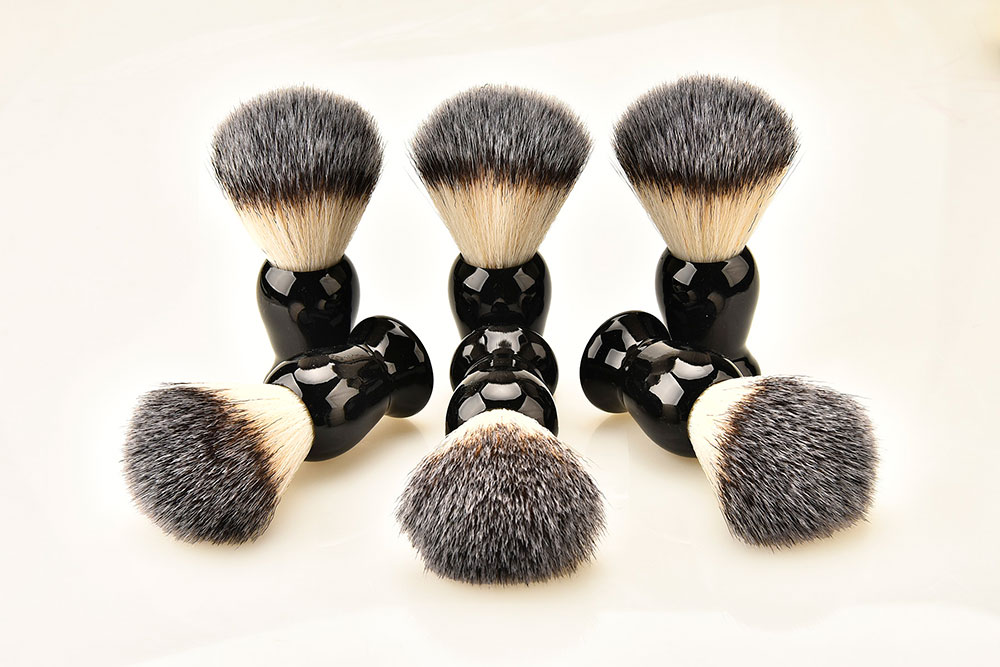
Another critical area of automation is handle assembly. Traditional methods involved manually attaching bristles to handles, a process prone to misalignment or weak adhesion. Automated robotic arms, programmed with 3D vision technology, can precisely position bristle tufts and apply adhesives with consistent pressure, resulting in stronger, more durable bonds. A case study from a leading shaving brush manufacturer showed that implementing robotic assembly reduced assembly time by 40% and cut rework rates from 8% to less than 2%, directly lowering labor costs while improving product reliability.
Quality control, a cornerstone of shaving brush manufacturing, has also been revolutionized by automation. Manual inspection often overlooks subtle defects, such as uneven bristle distribution or hairline cracks in handles. Automated quality control systems, combining machine vision and sensor technology, conduct 100% inspection of finished products. These systems can detect flaws as small as 0.1mm, ensuring only products meeting strict quality criteria reach the market. Notably, this shift has not eliminated human roles but redirected workers to oversee automation systems, perform maintenance, and handle complex quality reviews—roles that add higher value to the production process.
The financial benefits of automation are tangible. By streamlining labor-intensive tasks, manufacturers report a 20-30% reduction in direct labor costs within the first year of implementation. Additionally, increased production speed—automated lines can produce up to 50% more units per shift—enables faster response to market demand, reducing inventory holding costs. Long-term, the investment in automation pays off through improved product consistency, which enhances brand reputation and customer loyalty.
Critics argue that automation may compromise the "craftsmanship" associated with high-end shaving brushes. However, modern automation is designed to augment, not replace, artisanal expertise. For example, while machines handle repetitive tasks, master craftsmen still oversee bristle selection for premium lines and fine-tune automation parameters to maintain the brush’s signature feel. This hybrid approach ensures that the essence of quality—softness, balance, and durability—remains intact.
As the industry evolves, trends like IoT integration and machine learning promise further advancements. Smart factories with connected equipment can predict maintenance needs, minimizing downtime, while AI algorithms continuously optimize production flows based on real-time data. For shaving brush manufacturers, embracing automation is no longer a choice but a necessity to stay competitive in a market that demands both affordability and uncompromising quality.
In conclusion, shaving brush manufacturing automation is reshaping the industry by reducing labor costs, increasing efficiency, and elevating quality standards. By leveraging technology to handle repetitive tasks and enhance precision, manufacturers can focus on innovation and craftsmanship, ensuring their products meet the demands of modern consumers while securing long-term profitability.


